

Kadant Johnson Rotary Joint Alternatives: A Practical Replacement Guide
If you operate corrugators, paper machines, calenders, or press rolls, you are likely running rotary joints originally specified as Kadant Johnson units — and at some point you will need a replacement faster or cheaper than the OEM channel can supply. The good news: a rotary joint is a well-understood mechanical component, and a correctly specified alternative performs the same duty reliably. The six-point checklist below tells you exactly what to verify before ordering from any independent manufacturer.
Why Buyers Source Kadant Johnson Rotary Joint Alternatives
Kadant Johnson is a long-established manufacturer whose joints are fitted as original equipment on many corrugating and paper machines worldwide. Three situations typically push maintenance teams toward independent alternatives:
- Long lead times on OEM parts. When a single-facer or hot-plate joint fails mid-run, waiting weeks for an OEM unit can cost far more in downtime than the part itself.
- Budget pressure on high-volume spares. A corrugator line may run a dozen or more steam joints. At fleet scale, unit pricing matters.
- Machine age. Older lines are often fully depreciated, and maintenance teams shift from OEM parts to qualified equivalents that keep the machine running at lower cost per year.
None of this is a criticism of the original equipment — it is standard industrial sourcing practice, the same as buying aftermarket bearings or seals for any legacy machine.
The Six-Point Compatibility Checklist
Before ordering an alternative rotary joint from any supplier — including Ruitus — verify these six points against the nameplate and installation drawings of your existing unit. If all six match, the replacement is a drop-in fit.
1. Mounting Interface
Check the flange pattern (bolt circle diameter, number and size of bolt holes) or the threaded stem size and orientation. The joint must bolt or thread onto the same roll journal without machining. Provide the supplier with a photograph of the nameplate plus the bolt-circle measurement.
2. Pipe Connections and Flow Direction
Confirm the inlet/outlet thread standard (NPT, BSPT/ISO 7-1, or BSP) and sizes, plus whether the joint is single-flow or dual-flow (steam in, condensate out through a stationary syphon). Syphon pipe diameter and dip length must match the roll internals.
3. Media, Temperature, and Pressure
State the medium (saturated steam, superheated steam, hot water, thermal oil), the operating temperature, and maximum pressure including spikes. Steam service up to 250°C and 1.6 MPa is standard territory for established independent manufacturers; above that, ask for the seal material specification in writing.
4. Speed and Bearing Configuration
Roll speed determines the bearing arrangement and whether the seal faces need dynamic balancing. Corrugator hot plates and preheaters typically run below 100 RPM (heavy-duty, low-speed service), while dryer cylinders and calenders run higher. Match the rated RPM of the replacement to the actual roll speed, not to the machine’s maximum.
5. Number of Passages
Single-passage joints handle one medium. Dual-flow and multi-passage designs carry steam in and condensate out — or multiple media — through one body with zero cross-contamination. The passage count must match the original exactly; a dual-flow joint cannot substitute for a single-flow unit.
6. Seal Spares and Service Life
Ask the supplier what the seal friction pair is made of (carbon graphite against silicon carbide or tungsten carbide is the proven combination for steam), what the expected seal life is in your duty, and whether spare seal kits are stocked for independent replacement. A joint whose seals you can rebuild on-site is worth more than a cheaper sealed-for-life unit.
How Ruitus Handles Johnson-Type Replacements
As an ISO 9001:2015-certified manufacturer exporting to more than 70 countries, Ruitus supplies rotary joints and rotary unions built to duty-equivalent specifications for corrugator, paper, and general industrial service:
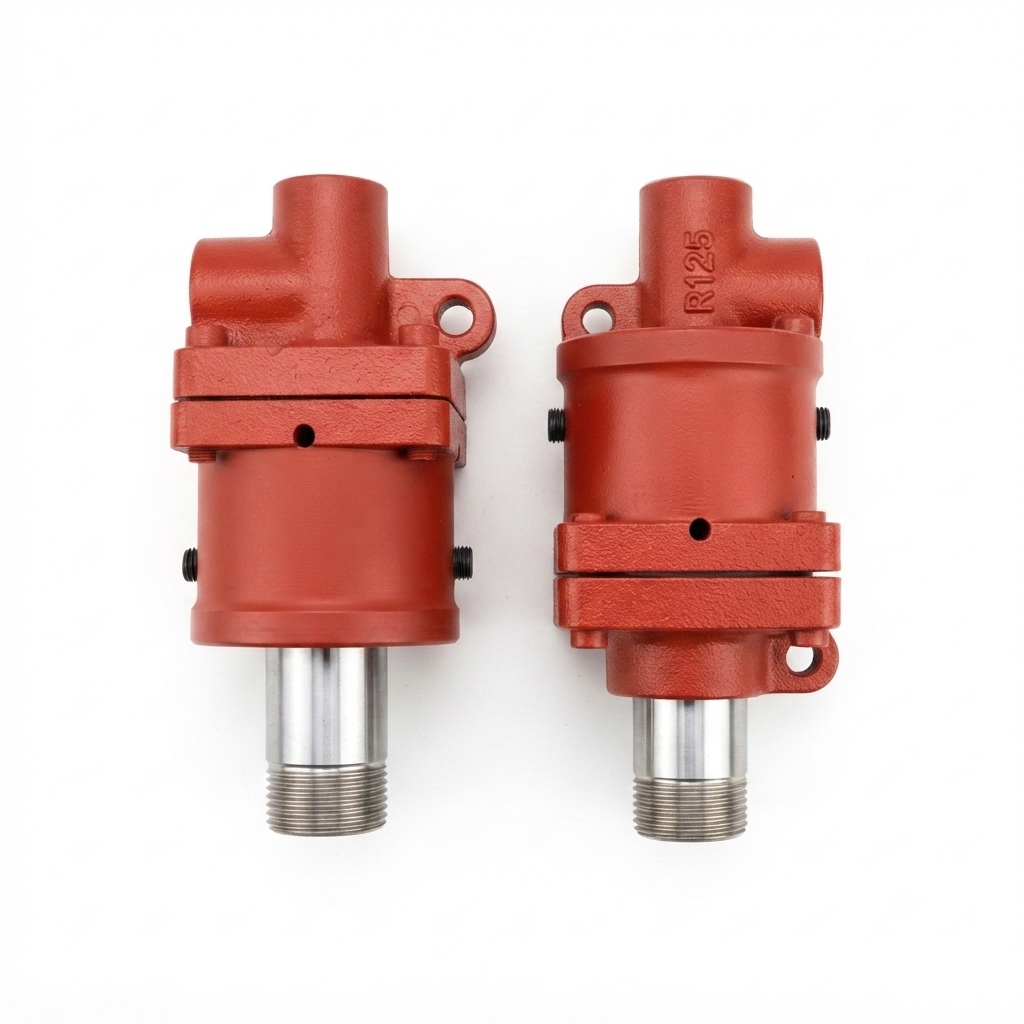
- RTQ series — low-speed, high-temperature steam and thermal-oil joints with a dual-spherical antimony-impregnated graphite seal, rated to 350°C. This is our workhorse for corrugator hot plates, preheaters, and dryer applications.
- RTH series — patented external multi-spring balanced-seal joints for water, coolant, and low-pressure steam, with easily replaceable friction pairs that cut seal-replacement time on the machine.
- Custom interchange builds — send us the nameplate photo and mounting dimensions of your existing joint, and our engineering team confirms within 24 hours whether a standard model is a drop-in fit or quotes a dimension-matched custom build (prototype in 3–4 weeks).
Standard units are priced from $50–500 depending on series and size — typically 60–80% below European and American OEM pricing — with volume discounts from 20 units and 15–20 day lead times on standard models.
What a Responsible Alternatives Policy Looks Like
Not every joint on your line needs to switch at once. The lowest-risk approach used by most maintenance teams we supply:
- Replace one joint first as a trial — the least critical position on the line.
- Run it for one full seal-life cycle with monthly leak inspections.
- Track roll temperature stability and any pressure loss, exactly as you would for an OEM unit.
- Only then convert the remaining positions, keeping the trial unit as a spare.
This costs you one joint and some patience, and it converts a supplier claim into verified evidence on your own line.
FAQ
Are Ruitus rotary joints interchangeable with Kadant Johnson units? Many are dimension-compatible drop-in replacements for common Johnson-type steam and hot-water joints on corrugators and paper machines. Because fit depends on the specific model and roll, we confirm interchangeability against your nameplate photo and mounting dimensions before you order — within 24 hours.
Why are independent alternatives so much cheaper than OEM joints? Factory-direct pricing without distributor margins, plus lower engineering overhead. The machining, seal materials, and testing are comparable — which is why the trial-first policy above is the right way to qualify any new supplier, independent or OEM.
Do you supply spare seal kits? Yes. RTH and RTQ friction pairs are designed for on-machine replacement, and seal kits are stocked separately so you can rebuild joints without buying complete units.
Get a Compatibility Check
Send a photo of the nameplate (or the model number) plus your operating conditions — medium, temperature, pressure, roll speed — through the contact form, or message Frank Cao directly at frankcao@ruitus.com / +86 177 9883 6850 (WhatsApp). You will receive a compatibility confirmation and a formal quotation within 24 hours.
Trademark notice: Kadant® and Johnson® are trademarks of Kadant Inc. Ruitus (Shandong Ruitus Machinery Technology Co., Ltd.) is an independent manufacturer and is not affiliated with, endorsed by, sponsored by, or connected to Kadant Inc. References to Kadant or Johnson products on this page are solely for compatibility identification and comparison purposes.
Related Articles
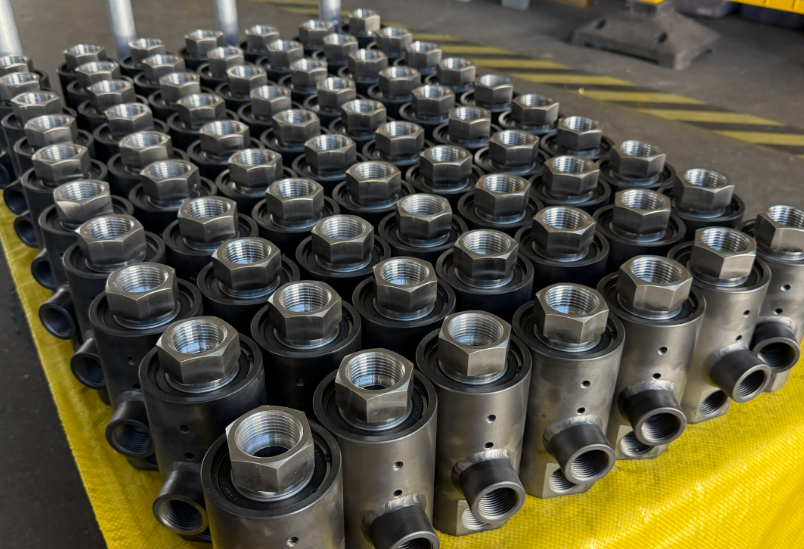
Engineering Excellence in Action: How Ruitus Upgraded a Major Vietnamese Steel Mill’s Rotary Joint Solution
Oct 5, 2026
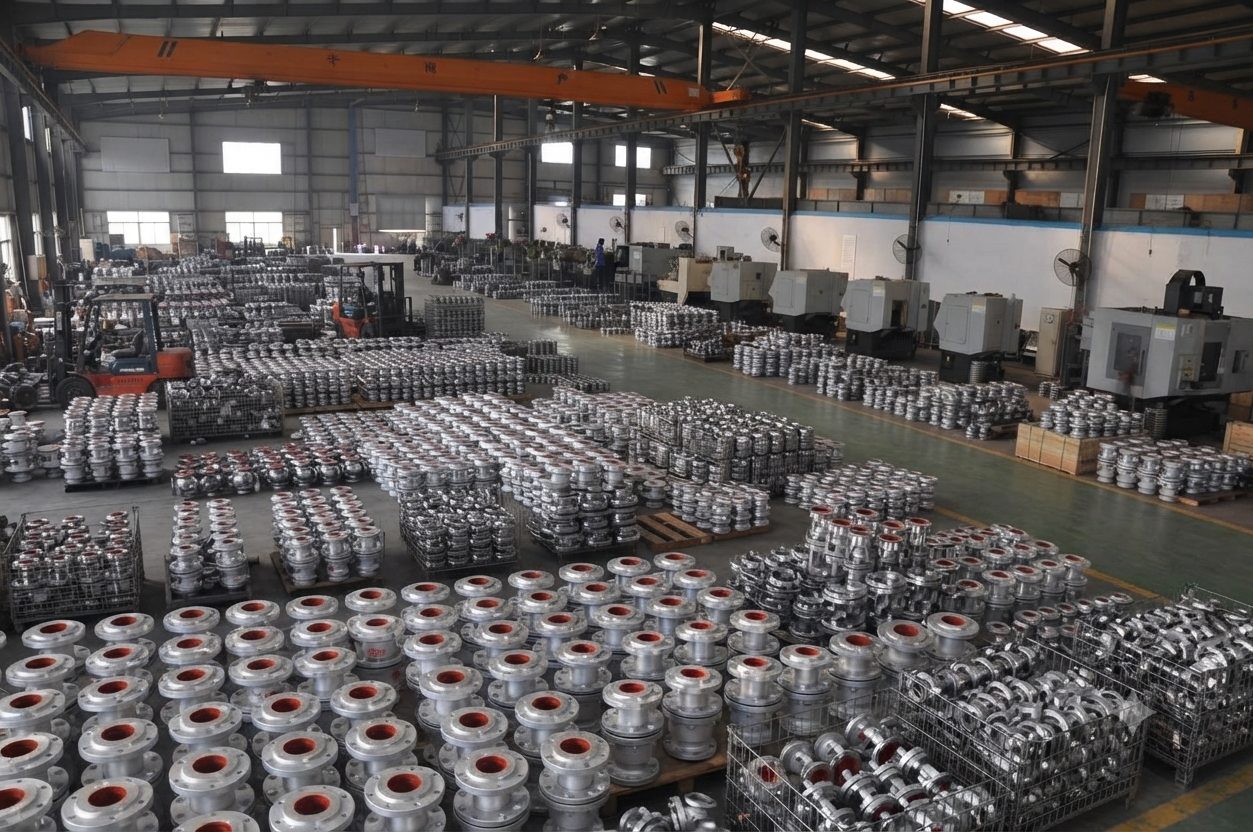
Rotary Joint vs Rotary Union vs Rotary Coupling: What's the Difference?
Oct 5, 2026
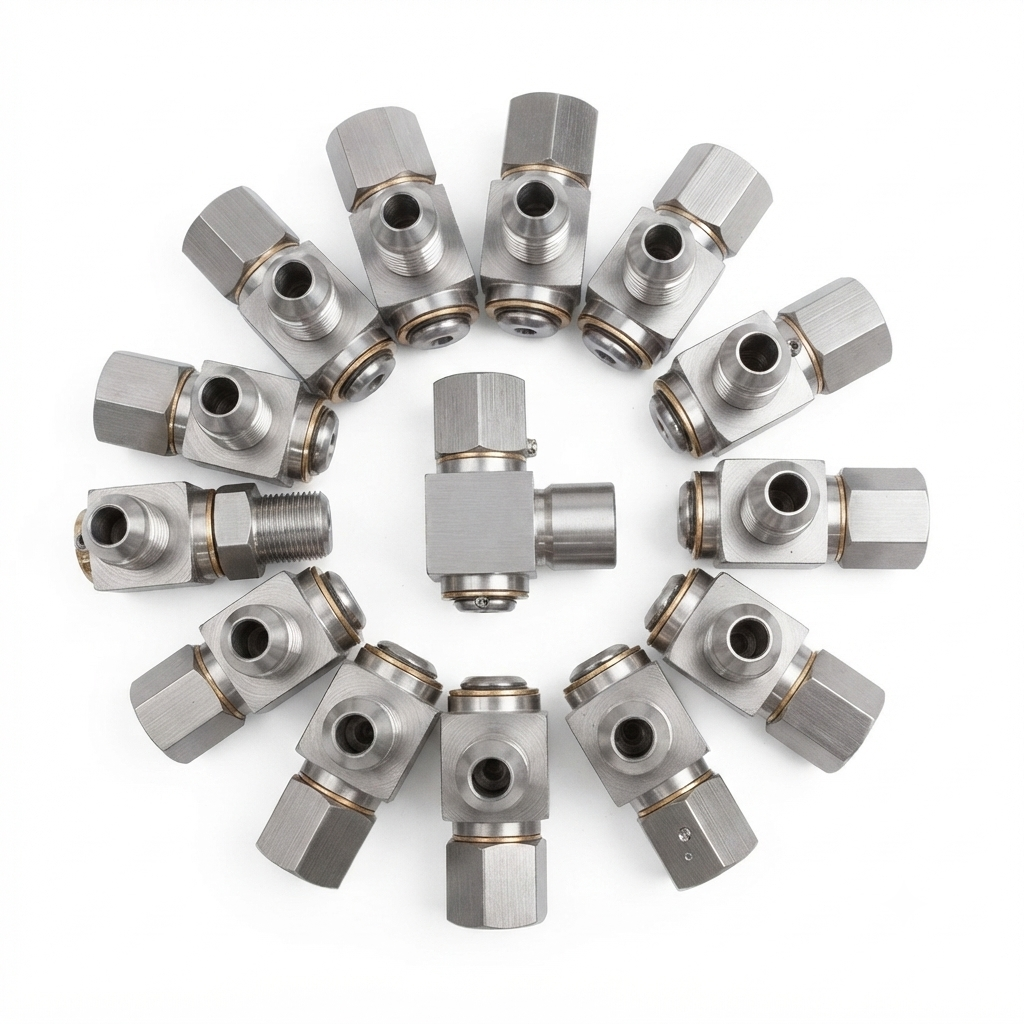
Stainless Steel vs Brass Rotary Joints: Material Selection Guide
Sep 29, 2026
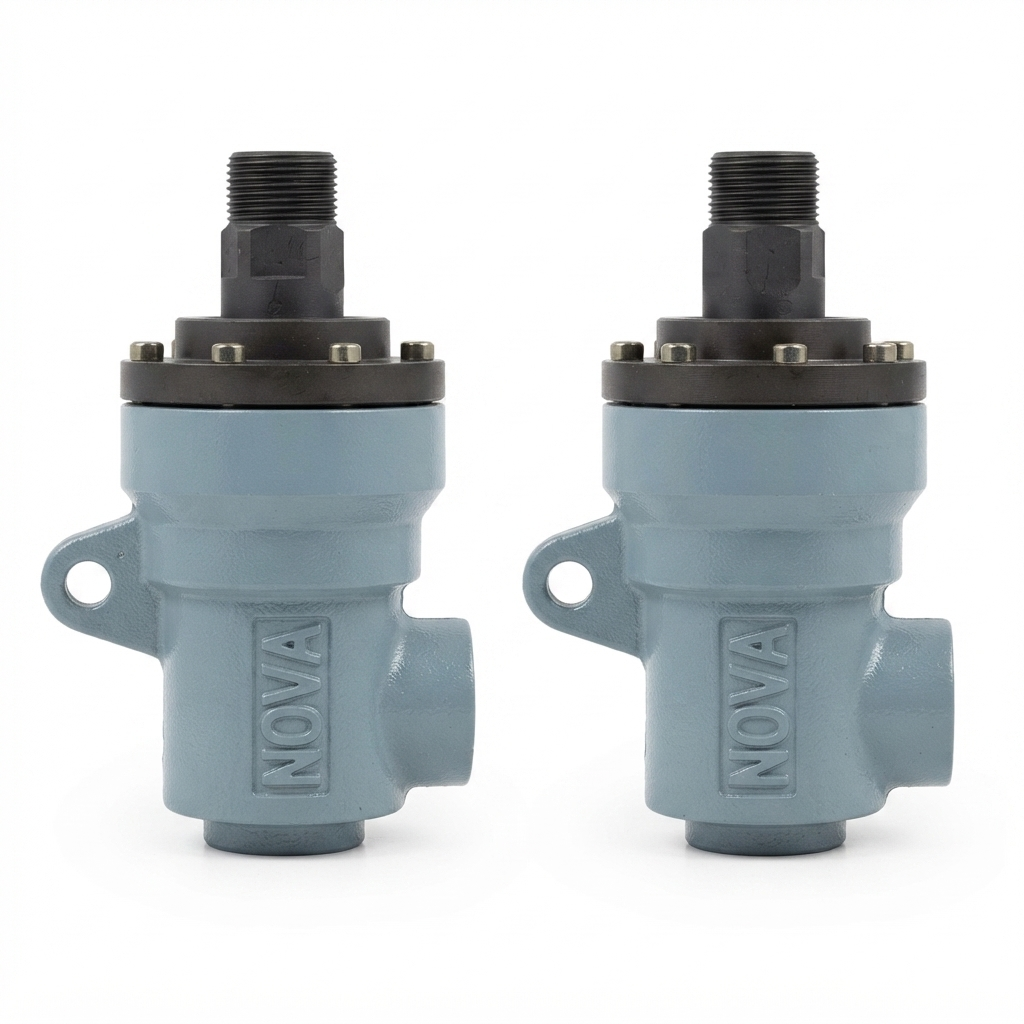
Send Us Your Drawing or Duty Conditions
Tell us the medium, temperature, pressure, speed and connection size. Our engineers reply with a selection or a custom proposal — usually within one working day.